
Atlas Intelligence
Atlas is the intelligence layer behind the sensors. It turns a whole network of nodes into one picture: classifying what each node hears and feels, resolving on one channel what is ambiguous on another, and handing the operator a short list of calls worth acting on with the evidence attached. It runs at the edge, offline, in the dark, and feeds the command tools operators already have in front of them.
Atlas turns a network of sensors into decisions.
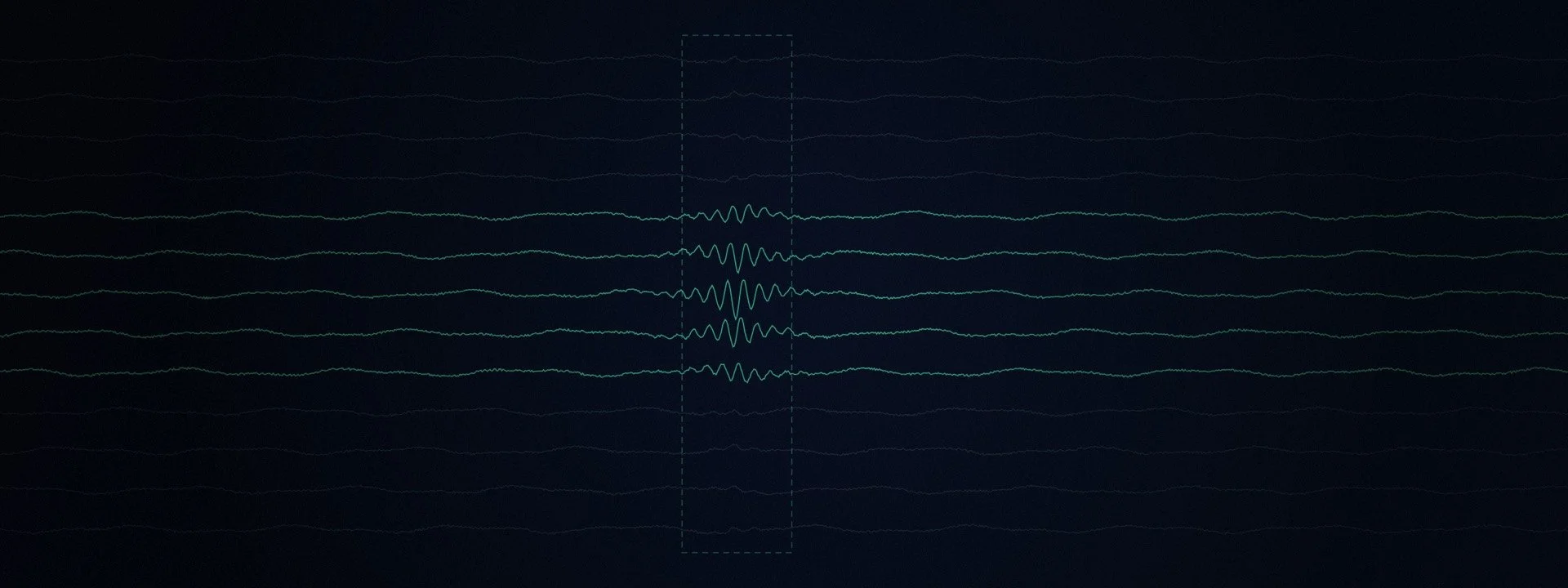
Acoustic, seismic and magnetic signatures are classified on the node and fused across the network into a single picture. Every detection arrives with a confidence figure and a provenance trail, then flows straight into ATAK or a standards-based feed. No cloud round-trip, no bandwidth dependency, and nothing that stops working when the link goes down.
Core Capabilities
Classification
Threat identification from raw sensor data, on the node itself. Acoustic signatures: gunshots, explosions, vehicles, drones, rotorcraft. Seismic and magnetic confirmation. The decision is made where the signal is, not in a datacentre somewhere else.
Fusion
Multi-source correlation. Acoustic, seismic and magnetic detections fuse into one picture, so a signature that is ambiguous on one channel is resolved by another. Every call carries the reason behind it, and false-alert rates are measured against the thresholds you set.
Calibrated confidence
Every detection carries a confidence figure that means something, and the system is built to abstain when the evidence is thin rather than guess. An alert from Atlas is one worth acting on.
Integration
Atlas publishes Cursor-on-Target for ATAK-class tools and a plain JSON stream for everything else. The output lands in the command chain you already run rather than in another screen to learn, and standards alignment is verified on your interface.
Technical Architecture
Edge Processing
Intelligence generated at the source. No cloud round-trip. No bandwidth dependency. Operates in contested, denied, and disconnected environments.
Distributed Computation
No single point of failure. Nodes operate autonomously and share processing load. Network degrades gracefully under attack.
Sensor Fusion
Integrates heterogeneous inputs: acoustic arrays, seismic and magnetic sensors, into a single operational picture. Correlates signals across time and space so one node’s uncertainty becomes the network’s certainty.
Built for the real world
Evaluations run on background activity, hard calls and rights-cleared recordings, not clean laboratory audio. The hard part of sensing is the day it rains, and that is what we test against.
Human in the loop
Atlas recommends, a person decides. Every output is built to be reviewed: what was detected, how confident the system is, and the evidence behind it. Built for operators who are accountable for the call they make.
Evidence Provenance
Every output traces back to its source data. Extraction method, confidence score and relationship chain are all recorded. Built for environments where an output has to survive scrutiny: military command, procurement review, regulatory bodies.
Applications
Force Protection
Early warning around forward positions and temporary sites. Passive, battery-powered and quiet enough to leave in place. Detections publish as Cursor-on-Target straight into ATAK, so they land in the tools operators already run.
Border Security
Continuous coverage of long, sparsely manned lines. Intrusion detection and classification in places where persistent manning is impractical and mains power does not reach.
Critical Infrastructure Protection
Perimeter awareness for power grids, pipelines, ports, transportation networks. Physical intrusion detection. Anomaly identification. Integration with facility security systems.
Why Atlas
Most detection systems answer with a label and a number that does not mean anything. The number is the whole problem: an operator who cannot tell a confident detection from a guess ends up treating every alert the same way, and then ignoring all of them.
Atlas is built the other way round. It reports what it is confident about, abstains when it is not, and shows its evidence either way. That is less dramatic than promising to replace the operator, and considerably more useful to one.
Development Status
Atlas is ready to evaluate today: replay, fusion, after-action records and a feed that lands in the command tools operators already run. Next milestone: your data, your workflow, one reproducible evaluation. Argus hardware is design-complete, with the first sensor and radio demonstration next.